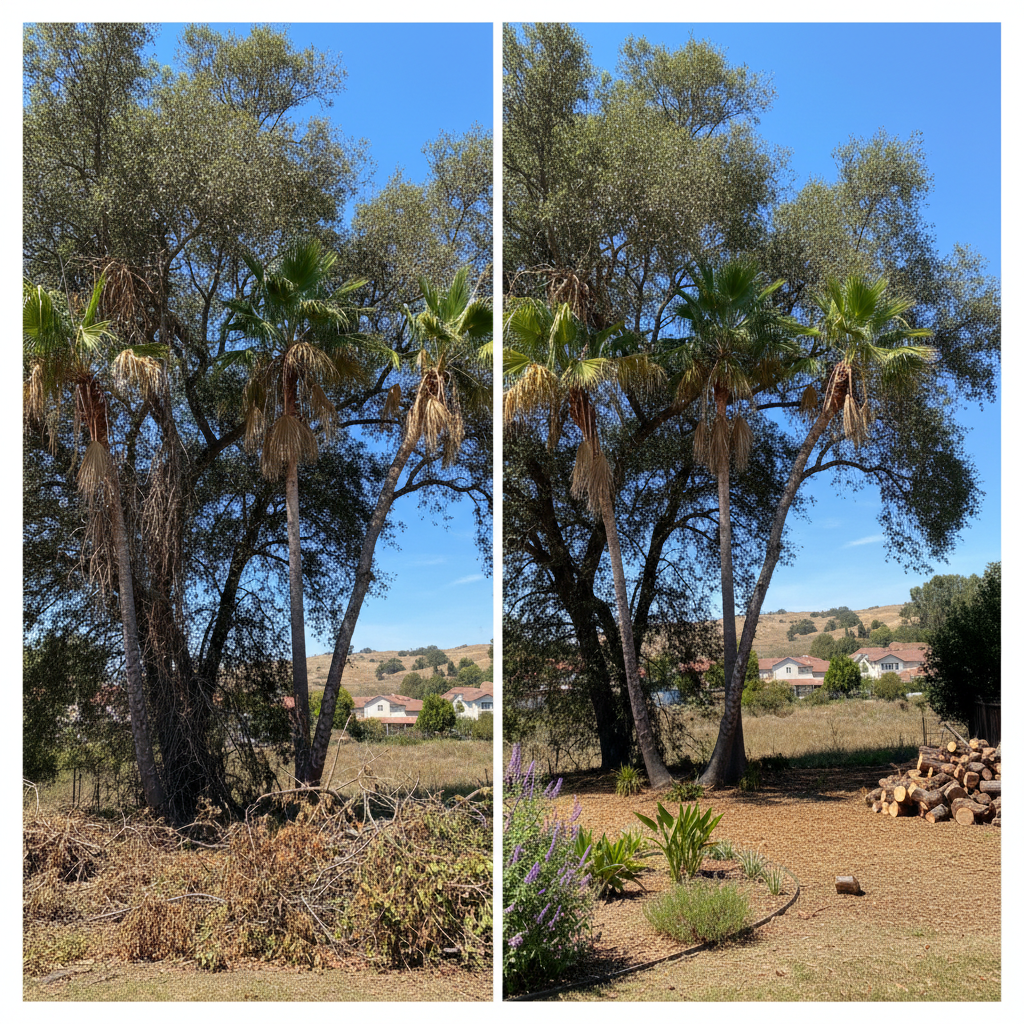
Alright, let's get straight to it. You've got trees in your yard, and at some point, they're gonna need a trim. Maybe they're getting too big, hitting the roof, or just looking a little wild. When you start thinking about how to handle it, you'll hear about two main approaches: 'topping' and 'proper pruning.' And I'm here to tell you, as someone who’s been working with trees in Camarillo for decades, there's a world of difference between the two, and one is almost always the wrong choice.
What's 'Topping' Anyway?
Topping is basically cutting off the entire top of a tree, or large sections of major branches, without any real regard for where the cuts are made. Think of it like giving your tree a really bad, blunt haircut right across the scalp. People usually do it because they think the tree is too tall or too wide, and they want to reduce its size quickly. They'll often cut branches back to stubs, leaving no lateral branches to take over as leaders.
I see this all the time, especially in older neighborhoods with mature trees that have grown a bit too enthusiastically. Homeowners get worried about branches overhanging the house or power lines, and they figure a drastic chop is the fastest fix. It's often done by folks who aren't really tree care professionals, or by 'landscapers' who don't understand tree biology.
The Ugly Truth About Topping
Look, I'm not going to sugarcoat it. Topping is terrible for your trees, and it's a short-sighted solution that creates more problems than it solves. Here's why:
- It's a huge stressor: Imagine losing most of your leaves in one go. That's how a tree makes its food. When you top a tree, you're essentially starving it. It has to use up stored energy to try and grow new leaves quickly, which weakens it significantly.
- Weak regrowth: Those fast-growing shoots that pop up after topping? They're called 'water sprouts' or 'epicormic shoots.' They're weakly attached to the parent branch and grow incredibly fast, often straight up. They're prone to breaking in strong winds – and we get some decent Santa Ana gusts here in Camarillo, don't we? I've seen countless trees that were topped years ago, and now they're a hazard because those weak sprouts are splitting off.
- Increased disease and pest vulnerability: Those large, open wounds left by topping cuts? They're like open invitations for insects and diseases. Trees can't heal massive wounds like that effectively, leading to decay that can spread throughout the tree.
- Ugly appearance: Let's be honest, a topped tree looks awful. It loses its natural shape and develops a club-like, unnatural form. It's an eyesore, pure and simple.
- More expensive in the long run: You might think topping saves money because it's a quick hack. But because of the weak regrowth, you'll need more frequent pruning to manage those sprouts, and eventually, you might have to pay for costly removal if the tree becomes too damaged or hazardous.
What is 'Proper Pruning'?
Proper pruning, also known as 'structural pruning,' 'crown reduction,' or 'thinning,' is an art and a science. It's about making thoughtful, strategic cuts that promote the tree's health, safety, and natural form. When we do it at Pacific Tree, we're thinking about the tree's long-term well-being.
Here's what proper pruning involves:
- Targeted cuts: We remove dead, diseased, or damaged branches. We also thin out crowded branches to improve air circulation and light penetration, which helps the tree stay healthy and strong.
- Reducing size safely: If a tree needs to be smaller, we make cuts back to a lateral branch that's at least one-third the diameter of the branch being removed. This directs the tree's energy into that smaller branch, maintaining a natural look and strong structure. It's called 'reduction pruning.'
- Maintaining natural shape: Good pruning enhances the tree's natural form, rather than destroying it. It keeps the tree looking beautiful and balanced.
- Promoting strong growth: By removing weak or crossing branches, we encourage the growth of strong, healthy limbs that can withstand our local conditions, like the heavy, clay-rich soils many of us have here that can sometimes lead to stability issues for certain tree types.
- Long-term health: Proper pruning reduces stress, minimizes pest and disease entry points, and extends the life of your tree.
Cost, Durability, Maintenance, and Appearance: A Quick Comparison
| Feature | Topping | Proper Pruning |
|---|---|---|
| Initial Cost | Often cheaper upfront because it's fast and unskilled. | More expensive initially due to skill, time, and specialized equipment. |
| Durability/Strength | Severely weakened tree; prone to breakage, decay. | Stronger, healthier tree; better able to withstand storms and pests. |
| Maintenance | Requires frequent, costly follow-up pruning to manage weak sprouts. | Less frequent pruning needed; maintains health and form for longer. |
| Appearance | Ugly, unnatural, disfigured. | Enhances natural beauty, maintains aesthetic appeal. |
| Tree Health | High stress, increased vulnerability to disease/pests, shortened lifespan. | Promotes health, vigor, and longevity. |
My Recommendation for Camarillo Homeowners
For your trees here in Camarillo, especially with our occasional high winds and the value we place on our landscapes, there's really only one choice: proper pruning.
I know it can be tempting to go for the quick, cheap fix, especially when a tree seems to be getting out of hand. But topping is a false economy. You'll pay for it later in increased maintenance, potential hazards, and ultimately, a tree that either dies prematurely or needs to be removed at a much greater cost.
Invest in your trees. They add so much to your property value, provide shade, and just make your home a nicer place to be. When you need a tree trimmed, call a certified arborist or a reputable tree service like Pacific Tree. We understand tree biology and how to make cuts that benefit the tree, not harm it. It's better for your tree, safer for your property, and looks a whole lot better too.