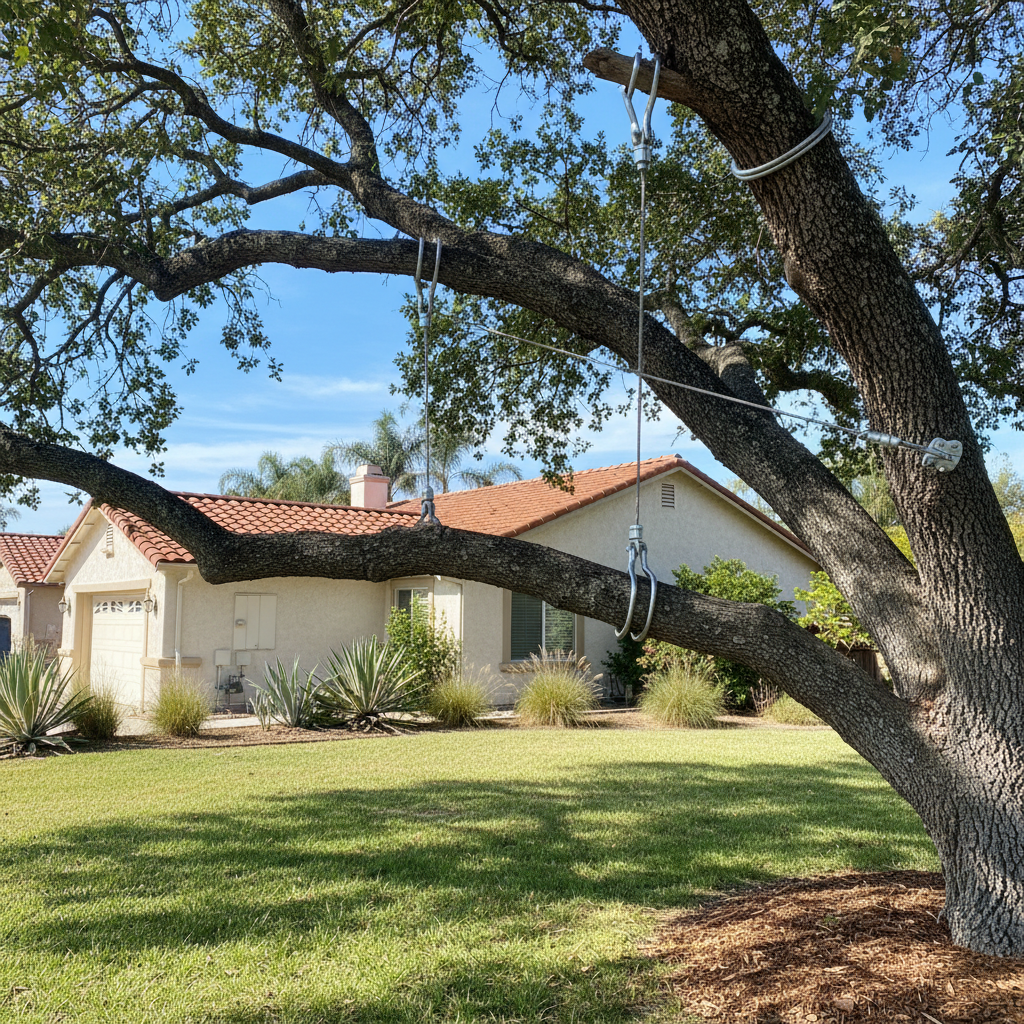
You've invested in cabling or bracing for your trees, and that's a smart move. It means you care about keeping those big, beautiful specimens healthy and safe, especially if they've got weak crotches, included bark, or just a heavy limb that needs a little extra help. But just like anything else, these systems aren't 'install and forget.' They need a little love and attention to do their job right, year after year. Here in Camarillo, with our dry summers and occasional Santa Ana winds, proper maintenance isn't just a good idea, it's essential.
Extending the Life of Your Tree's Support System
When I install a cabling or bracing system, I'm putting in top-quality materials designed to last. But 'last' doesn't mean 'indefinitely' without any upkeep. The biggest thing you can do to extend the life of these systems is simple: keep an eye on them. Think of it like changing the oil in your car. It's preventative.
First off, make sure the tree itself is healthy. A tree that's struggling with disease or pests isn't going to hold up its end of the bargain, no matter how good the cables are. Regular watering, especially for younger trees or during extended dry spells – which we get plenty of here – helps keep the wood strong. Also, smart pruning is key. Don't let the tree get so dense that it's catching too much wind, putting undue stress on those cables. A good arborist can thin the canopy properly without over-pruning, which is just as bad.
Another thing I often see is homeowners or even other landscapers not understanding how these systems work. Don't let anyone tie things to the cables or use them as anchor points for other structures. That's a recipe for disaster and can prematurely wear out the system or even damage the tree.
What Regular Maintenance Looks Like
So, what should you be doing? It's not rocket science, but it does require a bit of observation. I recommend a visual check at least twice a year, and definitely after any significant wind event. Here's what to look for:
- Cable Tension: The cables should be taut, but not overly tight. They're there to provide support, not to constrict the tree. If a cable looks slack, it might mean the tree has grown, the anchor points have shifted, or something else is wrong.
- Hardware Condition: Check all the hardware – the eye bolts, thimbles, turnbuckles, and the cable itself. Are there any signs of rust? Is anything bent or frayed? Are the bolts still firmly seated in the wood? For older systems, especially those installed with rigid rods, look for any signs of cracking around the entry points.
- Tree Growth Around Hardware: Trees grow, and sometimes they can start to grow around the hardware. This is called 'girdling' and it can be a problem. The hardware should be sitting cleanly in the wood, not being swallowed by it. If you see the tree starting to engulf the hardware, that's a sign it might need adjustment.
- Rubbing or Chafing: Make sure no part of the cable or bracing is rubbing against another branch or the trunk. This can cause damage to the bark and create entry points for pests or disease.
For us here in Camarillo, especially in neighborhoods like the Santa Rosa Valley where trees can get pretty big and exposed, those wind events are your biggest test. After a strong gust, always do a quick walk-around.
Warning Signs You Shouldn't Ignore
Ignoring small issues can lead to big, expensive problems down the road. Here are some definite red flags that mean something's not right:
- Visible Slack in Cables: If a cable is noticeably loose or sagging, it's not doing its job. It could mean the tree has shifted, or an anchor point is failing.
- Cracks or Splits in the Wood: This is the most serious sign. If you see new cracks appearing near the attachment points or along the limb the cable is supporting, that system might be failing, or the tree's structural integrity is compromised.
- Hardware Pulling Out: If an eye bolt looks like it's starting to pull out of the tree, or if the wood around it is cracking or splintering, that's an immediate concern.
- Rust or Corrosion: While some surface rust on older hardware might just be cosmetic, heavy rust can weaken the integrity of the system. If a cable looks frayed or strands are breaking, it's definitely compromised.
- Unusual Tree Movement: If the tree or a supported limb seems to be moving more than usual in the wind, even with the cables, it's a sign that the system isn't providing adequate support.
When to Call a Professional
Look, I'm a big believer in homeowners being proactive, but there are times when you just need to call in an expert. If you see any of the warning signs I just mentioned, don't try to fix it yourself. Tree cabling and bracing is specialized work, and messing with it without the right knowledge or equipment can be dangerous for you and the tree.
You should also call Pacific Tree for an inspection if:
- It's been more than 3-5 years since the system was installed or last inspected.
- The tree has grown significantly since the installation.
- You're unsure about anything you're seeing during your visual checks.
- There's been a major storm or high wind event that you're concerned might have stressed the system.
A professional arborist can assess the entire system, make necessary adjustments, replace worn components, or even recommend an upgrade if the tree's needs have changed. It's a small investment to protect a much larger one – your tree and your property. Don't wait until a limb comes down to realize the system needed attention. Be proactive, and those cables and braces will keep your trees standing tall and strong for years to come.