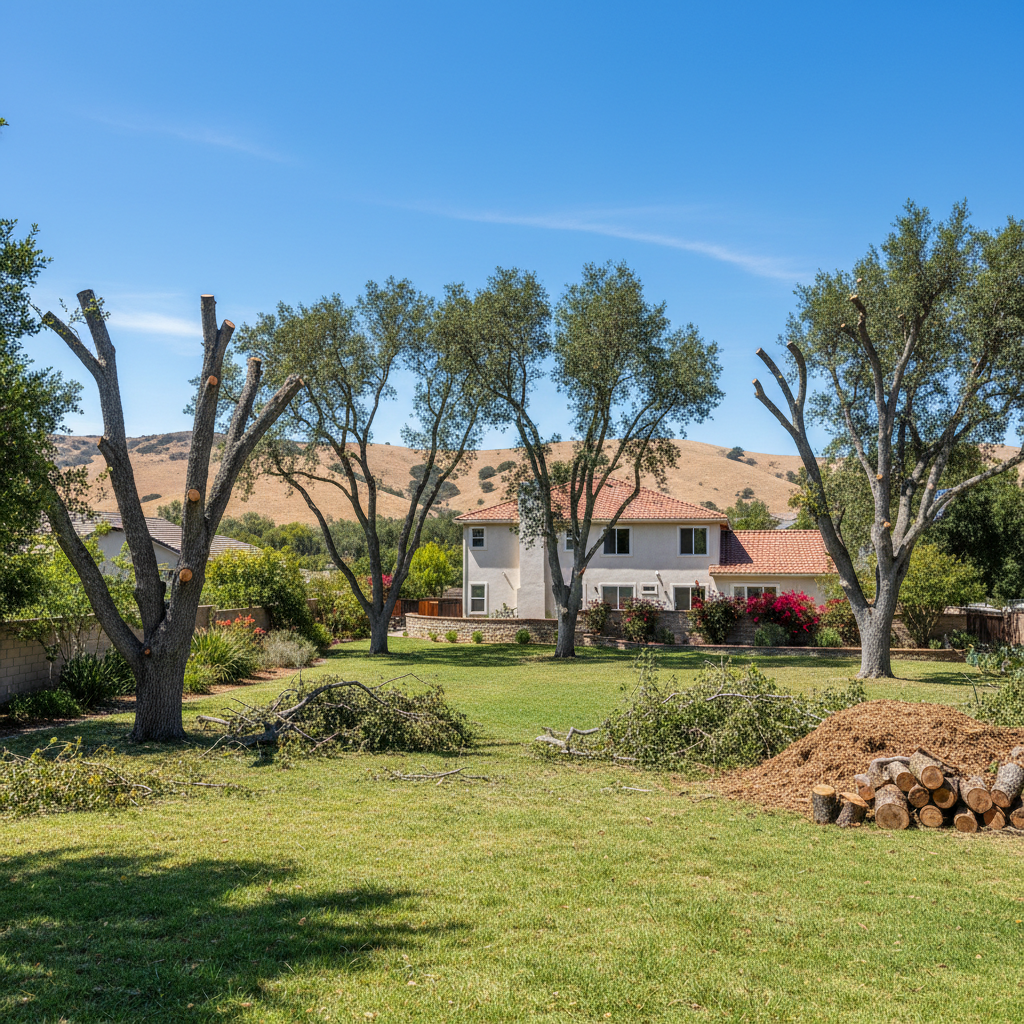
You've got trees, and at some point, they're going to need a trim. It's just part of owning property, especially here in Camarillo where our trees grow fast with all this sunshine. But I've seen a lot of folks make some pretty big blunders when it comes to getting that work done. These aren't just minor hiccups; we're talking about mistakes that can hurt your trees, your wallet, or even your peace of mind. Let's talk about what I see most often so you can avoid the headaches.
Mistake #1: Hiring the Lowest Bidder Without Checking Credentials
This is probably the biggest one. Everyone wants a good deal, I get it. But when someone quotes you a price that's significantly lower than everyone else, you've got to ask yourself why. Often, it's because they're cutting corners. They might not be insured, they might not have the right equipment, or they might not know what they're doing. If a crew shows up in an unmarked truck, no uniforms, and a beat-up chainsaw, that's a huge red flag.
Here's what you need to confirm:
- Insurance: Are they fully insured? I'm talking about liability insurance and workers' compensation. If they're not, and someone gets hurt on your property or your house gets damaged, you could be on the hook. Don't just take their word for it; ask for a certificate of insurance directly from their insurance company.
- Licensing: Are they licensed for tree work in California? A legitimate tree service will have a C-27 Landscape Contractor license or a C-61/D49 Tree Service license. You can look this up on the CSLB website.
- References: Ask for them. A good company will be happy to provide names of satisfied customers.
It sounds like a lot, but a few minutes of checking can save you thousands of dollars and a ton of stress down the road. Trust me, I've seen the aftermath of uninsured crews doing shoddy work.
Mistake #2: Not Understanding What Your Trees Actually Need
You might think, "Just trim it back." But there's a huge difference between proper pruning and just hacking away. Different trees have different needs, and the goal of trimming should always be to improve the tree's health, structure, and appearance, not just to make it smaller. For instance, topping a tree – cutting off the main branches to stubs – is almost always a bad idea. It stresses the tree, makes it susceptible to disease, and often leads to weak, rapid regrowth that's even more dangerous in the long run. We've talked about this before, but it bears repeating.
A good arborist will talk to you about the specific type of tree you have, its current condition, and what kind of pruning will benefit it most. Are we removing deadwood? Thinning the canopy for better air circulation? Raising the crown for clearance? Don't just say "trim it." Ask questions and make sure you understand the plan.
Mistake #3: Ignoring City Permits or HOA Rules
This is one people often forget, especially with larger trees. Depending on the size, species, and location of your tree, you might need a permit from the City of Camarillo before you can do any significant trimming or removal. Some protected species, even on private property, require special permission. Also, if you live in a planned community like some of the older neighborhoods around Mission Oaks or Santa Rosa Valley, your Homeowners Association (HOA) likely has rules about tree size, species, and maintenance. Getting caught without the right paperwork can lead to fines, and that's just money out the window.
A reputable tree service, like us at Pacific Tree, will usually be able to advise you on permit requirements or at least point you in the right direction. It's always best to check first.
Mistake #4: Waiting Until It's an Emergency
I get calls all the time after a big windstorm, or when someone notices a huge branch hanging precariously over their roof. While we're always ready for emergency work, waiting until a tree is a hazard is often more expensive and more dangerous than proactive maintenance. Regular, smaller trims can prevent larger, more costly problems down the line. It's like changing the oil in your car; you do it to prevent a breakdown, not just after the engine seizes.
Keep an eye on your trees. Look for dead branches, cracks in the trunk, or branches growing too close to your house or power lines. If you're unsure, get an arborist out for an assessment. A little preventative care goes a long way, especially with our occasional Santa Ana winds that can really test a tree's strength.
Hiring for tree trimming shouldn't be a gamble. By doing a little homework, asking the right questions, and understanding what your trees need, you can avoid these common pitfalls and ensure your trees stay healthy and beautiful for years to come.